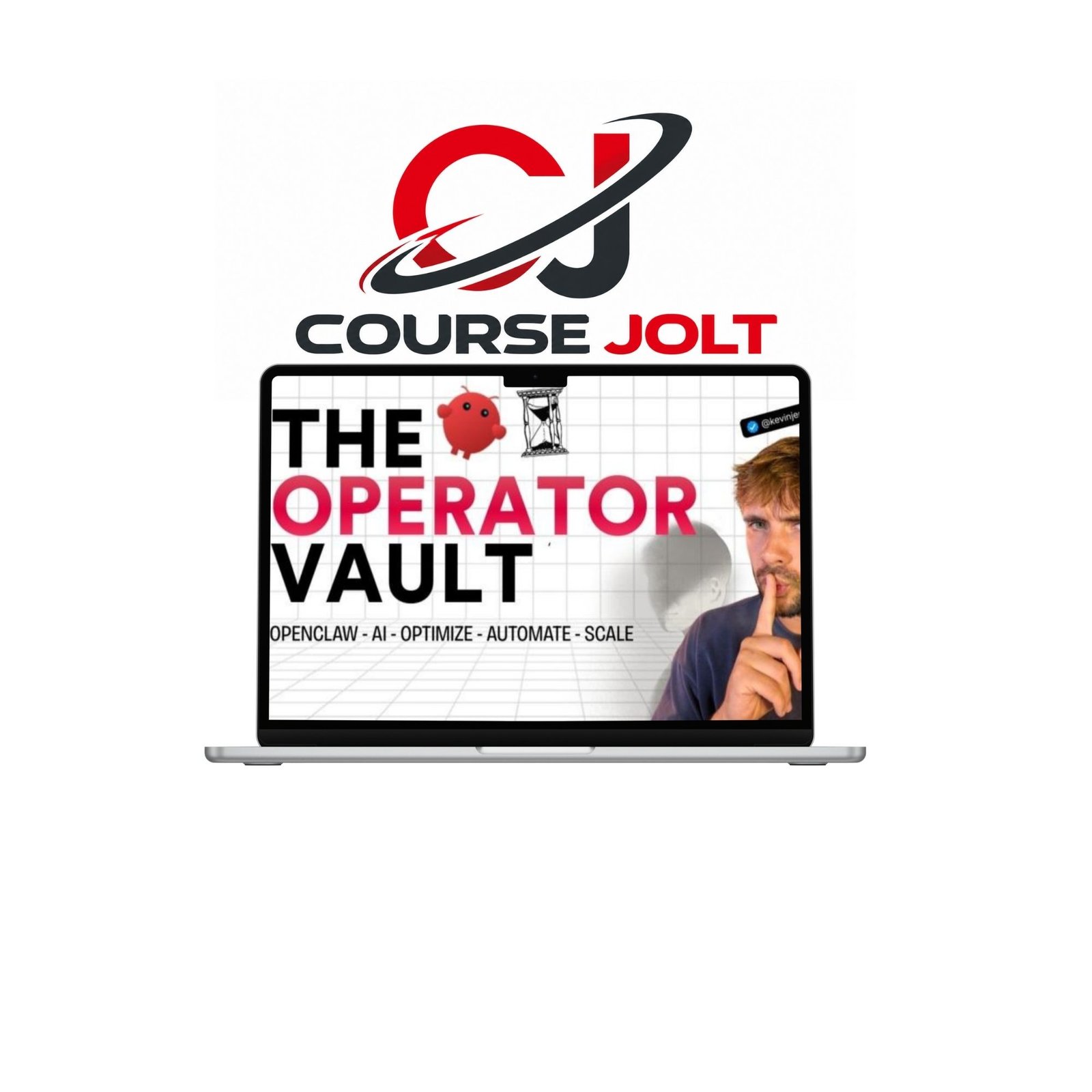
David Jeppesen The Operator Vault (2026)
Original price was: $77.00.$15.00Current price is: $15.00.
David Jeppesen – The Operator Vault, a business-focused learning resource covering operational thinking, workflow management, business systems, and process improvement. Discover how structured procedures, performance monitoring, and thoughtful automation can support more organized business operations. Suitable for entrepreneurs, freelancers, digital business owners, and professionals interested in improving how work gets done. Check the official course outline for confirmed lessons and resources.
Contact us directly to receive your payment link.
🟢 Get Payment Link on WhatsAppChat with us on WhatsApp for instant assistance.
🟢 Get Payment DetailsDescription
Course Overview
Building a business involves more than finding customers or creating a product. Sustainable operations also depend on organized processes, clear responsibilities, effective systems, and the ability to manage everyday activities consistently.
David Jeppesen – The Operator Vault is presented here as a business-focused learning resource for people interested in business operations, operational systems, workflow management, and improving the way a business runs.
For entrepreneurs, business owners, freelancers, and professionals, understanding operational thinking can help turn scattered tasks into more organized processes. Instead of relying entirely on memory or handling every responsibility manually, businesses can benefit from documented procedures, repeatable workflows, and systems that make daily work easier to manage.
The following description explains the relevant business concepts. Specific lessons, frameworks, templates, and resources included in The Operator Vault should be confirmed through the original provider.
Understanding the Operator Mindset
An operator focuses on how a business functions in practice. This includes understanding its processes, identifying inefficiencies, organizing resources, monitoring performance, and making improvements that support its objectives.
A business idea may be promising, but execution depends on the systems used to deliver products or services. When responsibilities are unclear or processes are inconsistent, even routine tasks can become difficult to manage.
An operational mindset encourages business owners to ask important questions:
- Which activities create the most value?
- Where are time and resources being wasted?
- Which tasks can be standardized?
- How should responsibilities be assigned?
- What information is needed to measure performance?
- Which processes could benefit from automation?
- How can the business maintain quality as it grows?
These questions help establish a foundation for making better operational decisions.
Build More Organized Business Systems
Business systems are repeatable methods for completing important activities. They help establish consistency and reduce unnecessary confusion.
For example, a digital business may need systems for managing customer inquiries, delivering services, organizing projects, tracking payments, and maintaining customer relationships.
Without clear procedures, these activities can depend too heavily on individual memory and improvisation. Documented processes make it easier to understand what needs to happen, who is responsible, and how the results should be checked.
Important concepts in business systems include:
Process Documentation
Recording how recurring tasks should be completed so that procedures are easier to understand, review, and improve.
Standard Operating Procedures
Creating step-by-step instructions for repeatable activities, helping teams maintain consistent standards.
Task and Responsibility Management
Clarifying ownership of individual tasks and establishing how work moves between people or departments.
Performance Monitoring
Using relevant measurements to understand whether processes are producing the intended outcomes.
Continuous Improvement
Reviewing existing systems regularly and making adjustments when better methods become available.
These principles can be useful for businesses of different sizes, although the appropriate level of structure depends on their needs.
Improve Workflow Management
Workflow management involves organizing tasks, information, and responsibilities so work can move efficiently from one stage to another.
Consider a business that receives a customer inquiry. The process may include recording the inquiry, assigning responsibility, preparing a response, following up, and documenting the outcome. A clearly defined workflow can help reduce missed steps and improve visibility.
Similar approaches can be applied to project delivery, content production, client onboarding, internal reporting, and administrative work.
Effective workflows should be simple enough for people to follow while providing sufficient structure to maintain quality.
Useful workflow principles include:
- Define the beginning and end of each process.
- Identify the tasks required at every stage.
- Assign clear responsibility for each activity.
- Reduce unnecessary repetition and handoffs.
- Establish checkpoints for quality control.
- Review the workflow when problems occur.
A well-organized process does not eliminate every problem, but it can make recurring work easier to understand and manage.
Operational Efficiency and Productivity
Operational efficiency is about using available time, money, people, and technology effectively while maintaining appropriate standards.
Improving efficiency does not necessarily mean asking people to work faster. It often means removing avoidable obstacles, reducing duplicated effort, and designing processes that make the desired work easier to complete.
For instance, if a team repeatedly prepares similar documents, a shared template may reduce unnecessary work. If project updates are scattered across different channels, a centralized tracking system may improve visibility. If employees regularly ask the same questions, documented procedures may provide quicker answers.
These improvements can create more predictable operations and free up time for activities that require creativity, expertise, or decision-making.
Business Operations for Digital Entrepreneurs
Digital businesses often involve several connected activities, including marketing, sales, customer communication, product delivery, support, and financial administration.
As a business grows, managing these activities informally can become increasingly difficult. Operational systems help business owners understand how different functions work together.
Marketing Operations
Organize campaign planning, content schedules, approval processes, and performance reporting.
Sales Operations
Structure lead management, follow-ups, customer records, and sales reporting.
Customer Operations
Establish consistent procedures for handling inquiries, onboarding customers, and responding to support requests.
Project Operations
Track deadlines, responsibilities, dependencies, and delivery requirements.
Administrative Operations
Organize recurring documentation, records, and other internal processes.
These are general examples of business operations rather than confirmed modules in The Operator Vault.
Using Automation to Support Business Systems
Automation can help businesses reduce repetitive manual work by connecting tools and standardizing recurring actions.
For example, a business might use software to organize incoming requests, send routine notifications, update project records, or prepare recurring reports. Automation is most useful when the underlying process is already understood and the desired result is clearly defined.
Before automating a process, it is important to determine whether the process itself needs improvement. Automating a confusing or inefficient workflow may simply reproduce the same problems at a greater scale.
A sensible approach involves documenting the process, identifying repetitive steps, selecting suitable tools, testing the automation, and monitoring the results.
Human review remains important for sensitive information, unusual situations, financial decisions, and actions that could have significant consequences.
Create Better Decision-Making Processes
Business decisions become easier to evaluate when relevant information is organized and performance is measured consistently.
Operational data may include task completion times, customer response times, project costs, error rates, sales activity, or service delivery performance. The most useful measurements depend on the business model and its objectives.
Instead of collecting numbers without a clear purpose, businesses should identify which indicators help answer important questions.
For example, tracking how long a recurring process takes may reveal where delays occur. Monitoring customer inquiries may help identify periods of high demand. Reviewing project completion rates may show whether deadlines and workloads are realistic.
The goal is to use information to understand the business and make informed improvements, not simply to create more reports.
Who May Benefit From Business Operations Training?
Entrepreneurs and business owners: People who want to organize their operations and establish more repeatable processes.
Digital business operators: Individuals managing online products, services, customers, or projects.
Freelancers and consultants: Professionals who want to structure client onboarding, service delivery, and administrative responsibilities.
Team leaders and managers: People responsible for coordinating tasks, maintaining quality, and improving team workflows.
Aspiring operators: Learners interested in understanding how businesses function beyond marketing and sales.
Professionals interested in automation: Individuals who want to identify business processes that may benefit from software tools and automation.
The relevance of this resource will depend on the actual course content and the learner’s experience.
Why Strong Operations Matter as a Business Grows
Growth can introduce additional complexity. More customers may create greater support requirements, more projects may require better coordination, and larger teams may need clearer responsibilities.
Without suitable systems, these changes can increase confusion and make quality harder to maintain.
Operational planning helps businesses prepare for recurring demands by documenting processes, clarifying ownership, and monitoring performance. It also provides a basis for identifying which activities should remain manual and which might be standardized or automated.
Strong operations do not guarantee business success. However, thoughtful processes can help organizations understand their work, manage resources, and respond to challenges more consistently.
Final Overview
David Jeppesen – The Operator Vault is positioned here as a business operations learning resource for people interested in systems, workflows, operational efficiency, and organized business management.
These topics are relevant to entrepreneurs, digital business owners, freelancers, and professionals who want to understand how processes support effective execution.
Before purchasing or publishing detailed claims about the resource, review the original provider’s information to confirm its curriculum, teaching format, included templates, practical exercises, and access conditions.
Frequently Asked Questions
1. What is David Jeppesen – The Operator Vault?
It is presented here as a business-focused course listing. Its exact contents and format should be verified with the original provider.
2. What does business operations mean?
Business operations refers to the processes, resources, and activities involved in running an organization and delivering its products or services.
3. Who may benefit from learning operational systems?
Entrepreneurs, business owners, freelancers, team leaders, and professionals interested in improving business processes may find the subject useful.
4. Why are standard operating procedures important?
They document repeatable tasks, clarify expectations, and help people follow consistent processes.
5. Can operational systems help a digital business?
Yes. Documented workflows can support activities such as customer onboarding, project delivery, support, administration, and internal coordination.
6. Does The Operator Vault teach automation?
Specific automation lessons have not been independently confirmed. Consult the official course outline to determine whether automation tools or tutorials are included.
7. Does the course include templates or downloadable resources?
The availability of templates, checklists, and downloadable materials has not been verified. Confirm these details with the provider.
8. Is the course suitable for beginners?
Its suitability depends on the teaching approach, prerequisites, and actual material. Review the curriculum before deciding.
9. Can better operations guarantee business growth?
No. Effective operations can support consistency and organization, but business outcomes depend on many factors, including demand, strategy, execution, and resources.
10. Where can I verify the course details?
Use the original provider’s official page or course platform to confirm the curriculum, resources, pricing, and access terms.
Related products
-
Sale!

Razvan Sava – Automation Tribe (2026)
Original price was: $59.00.$15.00Current price is: $15.00. -
Sale!

Stephen G. Pope – No-Code Architects (2026)
Original price was: $97.00.$20.00Current price is: $20.00. -
Sale!

Noe Varner – NoeAI Premium (May 2026)
Original price was: $97.00.$20.00Current price is: $20.00. -
Sale!

Goda Go – Autonomee: Claude Code Pro (2026)
Original price was: $97.00.$18.00Current price is: $18.00.
Reviews
There are no reviews yet.